
An impressive example of how VR tools are used in education!
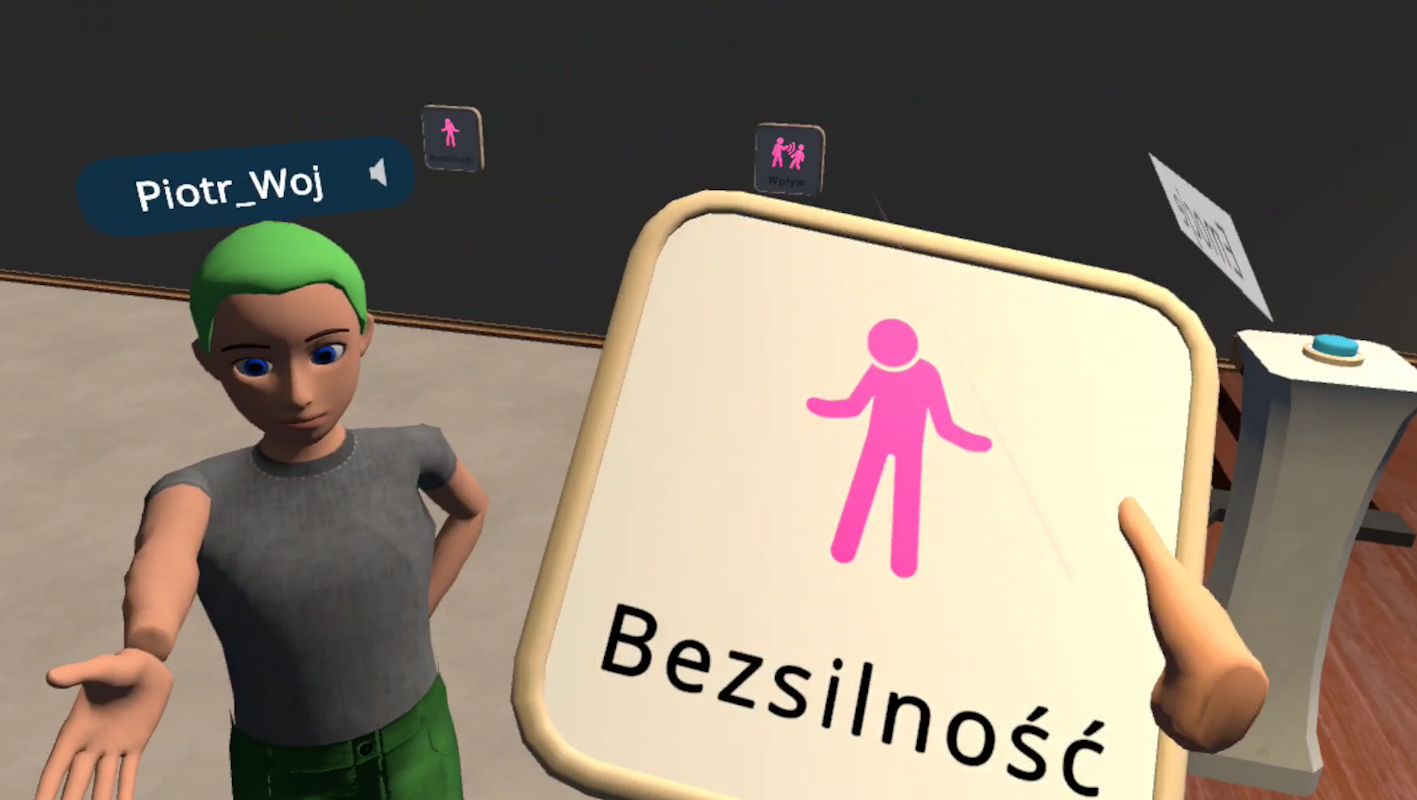
During the past school year, Syntea S.A. (Project Coordinator) conducted training sessions using VR tools for students and teachers. In principle, there would be nothing worth reporting here—after all, these types of activities are part of the company’s standard services. What is worth reporting, however, is the scale of the activities carried out.
In just the last two months of the school year (May–June 2026), 1,427 learners and staff from a total of 18 public schools were trained! During this time, the sessions were led by 12 professional trainers who interacted with participants in a VR environment. A total of 409 training groups were conducted in this way!
The sessions in question were conducted entirely in a VR environment. At a set time, participants put on VR headsets and joined shared training scenarios, seeing each other in a fully immersive environment and communicating via voice chat in real time. The trainer leading the session joined the group in exactly the same way. In many cases, the training sessions were conducted using a dispersed method (students or teachers from different schools connecting to a single, shared training session from various locations across the country). The trainers joined the training sessions from Syntea S.A.’s headquarters.
This example illustrates the potential of VR technology for educational purposes, particularly in bringing together people from different parts of the world to deliver training services. This is of exceptional importance in the context of projects carried out under the ERASMUS program—given the key role that international mobility plays in them. A training session conducted in this way offers much more than a standard video conference. It allows people who are geographically distant from one another to meet in a three-dimensional environment, see one another, and collaborate while engaging in physical interaction (a full-scale VR environment allows for mutual interaction between users, as well as between users and the simulated environment—for example, by passing objects or tools to one another and jointly performing tasks that require physical activity).
Syntea S.A.’s experience also shows that training conducted exclusively using VR tools on a large scale is not only possible but can also yield significant results.