
Evaluating the User Experience in Virtual Reality Education: Cybersickness, Presence, and Learning Outcomes
Introduction
Virtual Reality (VR) technology is transforming education by creating immersive learning environments where students can explore ancient civilizations, manipulate molecular structures, or practice complex medical procedures without leaving the classroom. As Head-Mounted Displays (HMDs) become more accessible and sophisticated, educators in biotechnical, medical, and scientific fields are increasingly adopting VR to enhance their teaching methods. However, the success of VR-based education depends on carefully balancing three critical factors: immersion, presence, and user comfort.
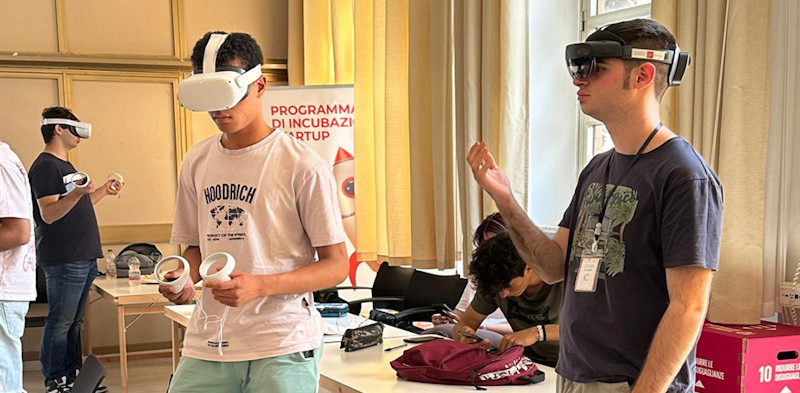
This article examines how these elements interact to shape learning outcomes, drawing on research conducted at the University of Siena, where comprehensive evaluation methods were developed to optimize VR educational experiences. Understanding these relationships is essential for creating effective VR learning environments that truly enhance rather than hinder the educational process.
Understanding User Experience in Virtual Reality
User Experience (UX) in VR education extends far beyond traditional computer interaction. According to the ISO 9241-210 definition, user experience encompasses “the user’s perceptions and responses resulting from the use of a system or a service.” In VR contexts, this definition takes on profound significance as users become psychologically and physically immersed in digital environments.
Research by Tcha-Tokey and colleagues identifies ten key components that shape VR user experience: presence, immersion, engagement, flow, usability, skill, emotion, experience consequence, judgement, and technology adoption. This multidimensional framework recognizes that presence—the feeling of “being there”—represents just one aspect of the complex VR experience. Each component influences how effectively students learn and retain information in virtual environments.
The Phenomenon of Presence and Immersion
Immersion in VR occurs through multiple pathways. Researchers distinguish between sensory immersion (achieved through high-quality graphics and spatial audio), physical immersion (enabled by head tracking and motion controllers), and imaginative immersion (fostered by compelling content and narratives). Educational VR applications must carefully orchestrate these elements to create meaningful learning experiences.
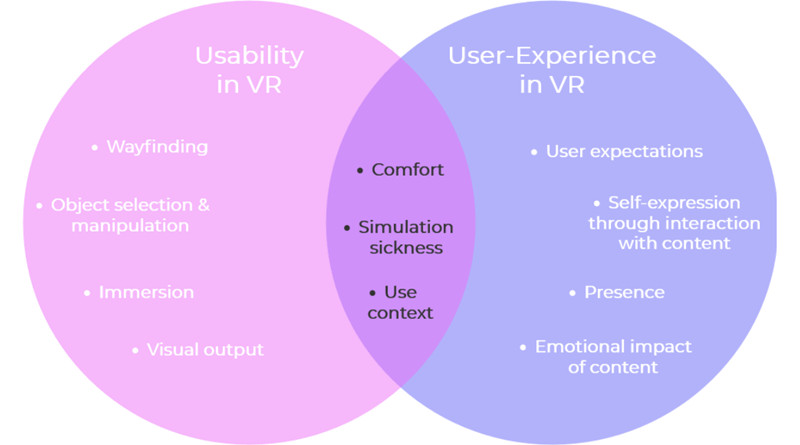
The concept of presence emerges when immersion successfully convinces users that they exist within the virtual environment. As one researcher describes her first VR experience: “it was really VR: I felt myself to be immersed in a virtual world in which I could take action.” This combination of perceptual immersion and agency—the ability to meaningfully interact with the environment—defines effective educational VR.
Studies demonstrate that higher levels of presence correlate with improved learning outcomes. When students feel genuinely present in virtual laboratories or historical sites, they engage more deeply with educational content and retain information more effectively than through traditional teaching methods.
The Challenge of Cybersickness
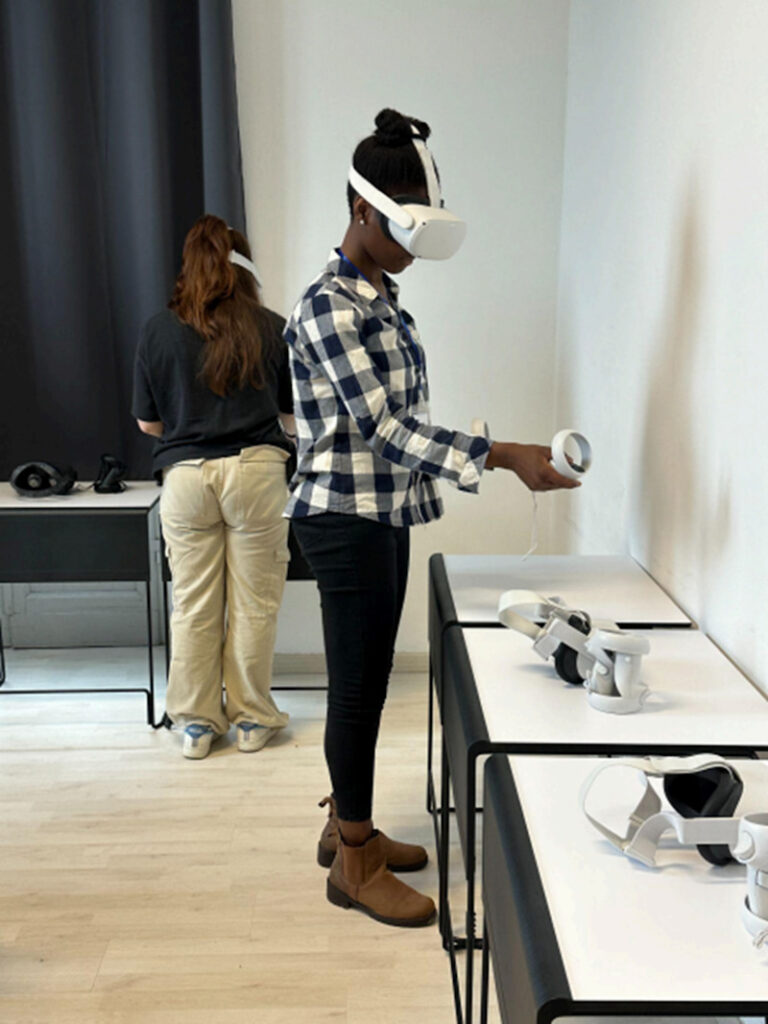
One significant barrier to VR adoption in education is cybersickness—a form of motion sickness triggered by virtual environments. This phenomenon occurs when visual motion cues conflict with vestibular sensations, creating perceptual discord that can cause nausea, disorientation, and eye strain.
Research using the Kennedy Simulator Sickness Questionnaire reveals that cybersickness affects users differently, with symptoms typically categorized into three areas: nausea (gastrointestinal discomfort), oculomotor disturbance (eye strain and focusing difficulties), and disorientation (dizziness and spatial confusion). These symptoms can severely impact learning effectiveness and user acceptance of VR educational systems.
Understanding and minimizing cybersickness is crucial for successful VR implementation in educational settings, where sustained engagement is necessary for knowledge acquisition and retention.
A Comprehensive Evaluation Framework
Researchers at the University of Siena have developed a holistic approach to evaluating VR educational experiences that addresses the multifaceted nature of user experience. This methodology combines objective performance metrics with subjective user assessments to provide comprehensive insights into the effectiveness of VR systems. More info can be found at this link: https://sites.google.com/unisi.it/uxinvr-eng/home-page
The evaluation framework tracks user behaviors during VR sessions, monitoring interaction patterns, error rates, and task completion times. Simultaneously, it employs validated questionnaires to assess three critical dimensions: cybersickness susceptibility, presence intensity, and system usability.
Cybersickness evaluation utilizes the Kennedy Simulator Sickness Questionnaire, which examines sixteen symptoms across three subscales. This instrument helps identify which aspects of VR systems cause discomfort and guides design improvements to enhance user comfort.
Presence assessment utilizes the Witmer Presence Questionnaire, which evaluates factors such as realism, sensory fidelity, interface quality, and audio effectiveness. This comprehensive evaluation reveals which design elements most effectively create the sense of “being there” that enhances learning.
System usability measurement through the System Usability Scale provides a quantitative assessment of user satisfaction and system effectiveness. Scores above 68 indicate above-average performance, helping educators and developers identify successful VR educational implementations.
Design Principles for Educational VR
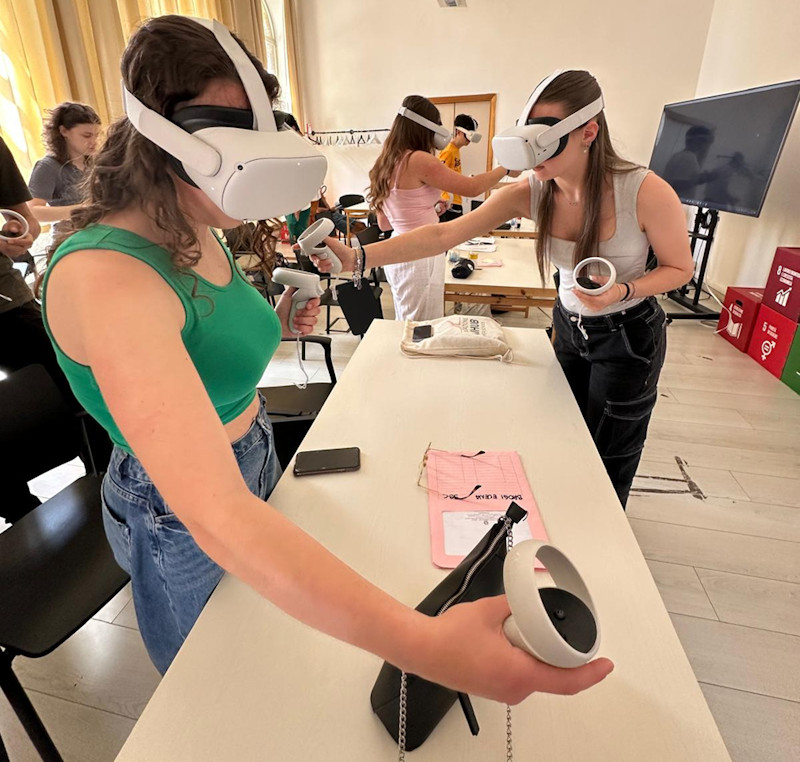
Effective educational VR requires a human-centered design approach that prioritizes learner needs over technological capabilities. This involves understanding how students actually learn and designing virtual environments that support natural learning processes.
Research suggests three fundamental principles for educational VR design. First, create reusable multimedia elements that allow flexible content delivery across different devices and learning contexts. Second, develop tools for self-directed learning that leverage VR’s interactive capabilities to promote autonomous exploration and discovery. Third, enable collaborative experiences where teachers and students can share virtual spaces and discuss content together.
These principles ensure that VR technology serves pedagogical goals rather than becoming an end in itself. By focusing on learning outcomes and user experience, educators can harness VR’s potential to create more engaging and effective educational experiences.
Future Directions and Implications
The evaluation framework presented here establishes a methodological foundation for the systematic assessment and continuous improvement of VR educational systems. Through the concurrent measurement of presence, cybersickness, and usability parameters, educators and technology developers can identify optimal system configurations tailored to diverse learning contexts and varied student populations.
As VR technology undergoes continued evolution, these comprehensive evaluation methodologies assume critical importance in ensuring that technological advancements translate into substantive educational improvements. The research programme conducted at the University of Siena demonstrates that meticulous attention to user experience factors can effectively address traditional barriers to VR implementation within educational settings.
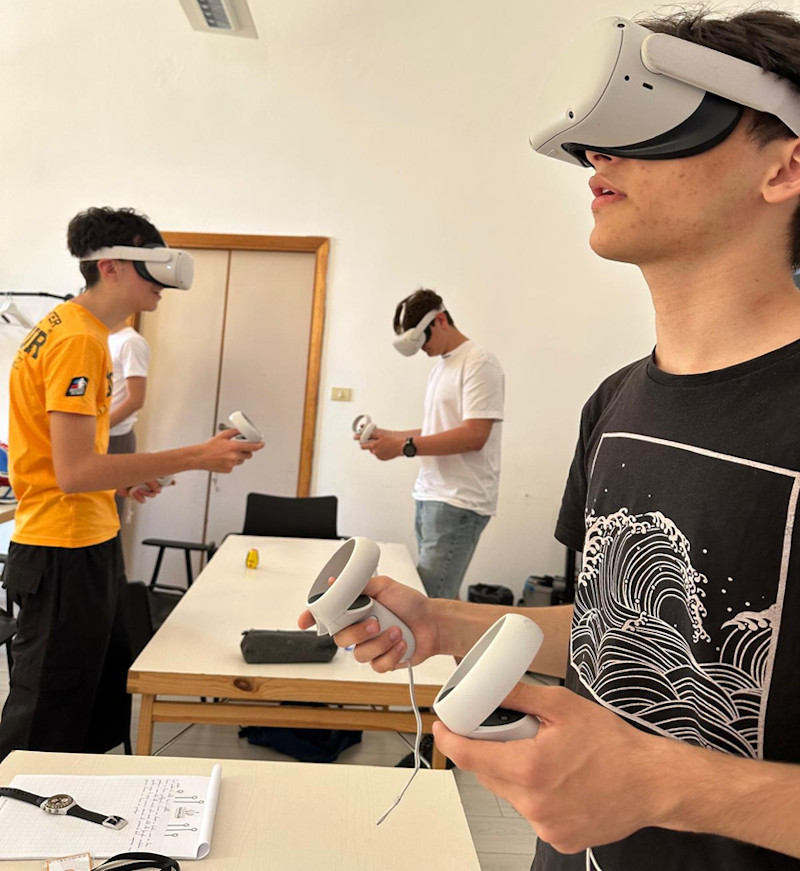
The trajectory of VR education ultimately depends not upon the technological sophistication of the systems themselves, but rather upon the deliberate and informed manner in which these technologies are implemented to support human learning processes. Through rigorous empirical evaluation and user-centred design methodologies, VR can fulfil its potential as a transformative educational medium, rendering abstract concepts tangible, hazardous procedures safe for practice, and geographically distant locations accessible to all learners.
Within the broader context of emerging training methodologies deployed in virtual environments, recent research initiatives have begun to systematically catalogue and validate educational programmes that leverage VR/AR technologies. Particularly noteworthy is the Training Registry of the Modern Business Services Sector (MBSS Register) project, which represents a substantial international collaborative research effort within this domain. This initiative, coordinated by Syntea S.A. in partnership with educational institutions from Poland, Cyprus, and Italy, endeavours to establish a comprehensive training registry specifically designed for the
Modern Business Services sector. The project’s strategic emphasis on incorporating VR/AR tools as innovative pedagogical methods aligns with contemporary research findings demonstrating enhanced learning outcomes through immersive technologies. Through the development of a centralised registry of validated training programmes—with particular attention to microcredentials and practical knowledge acquisition—the MBSS Register addresses the increasing demand for standardised, high-quality virtual training solutions that can be recognised across European Union member states through alignment with the European Qualifications Framework (https://mbssregister.eu).
This standardisation initiative proves particularly relevant to the present research, as it underscores the importance of establishing validated methodologies for VR-based educational environments across diverse application domains, from architectural evaluation studies to professional training programmes. The convergence of these applications demonstrates the considerable versatility of VR technology as both a research instrument and a practical platform for skill development and environmental assessment procedures.
References:
- Ermini, S., & Innocenti, A. (2023). Immersive Virtual Reality (iVR) technologies for university education: A human-centered approach. LabVR UNISI, University of Siena, Italy.
- Kennedy, R. S., Lane, N. E., Berbaum, K. S., & Lilienthal, M. G. (1993). Simulator sickness questionnaire: An enhanced method for quantifying simulator sickness. The International Journal of Aviation Psychology, 3(3), 203-220.
- Sherman, W. R., & Craig, A. B. (2003). Understanding virtual reality: Interface, application, and design. San Francisco: Morgan Kaufmann Publishers.
- Tcha-Tokey, K., Loup-Escande, E., Christmann, O., & Richir, S. (2016). A questionnaire to measure the user experience in immersive virtual environments. In Proceedings of the 2016 Virtual Reality International Conference (Article 19). ACM.
- Witmer, B. G., & Singer, M. J. (1998). Measuring presence in virtual environments: A presence questionnaire. Presence: Teleoperators and Virtual Environments, 7(3), 225-240.