
Virtual Reality Simulations for Science Education: Case Studies from ITSVita
Virtual reality (VR) is gradually finding its place in science education, particularly in fields requiring extensive laboratory practice, such as biotechnology and medical training. The Italian foundation Higher Technical Institute for New Life Technologies (ITSVita – Istituto Tecnologico Superiore per le Nuove Tecnologie della Vita) has developed several VR simulations aimed at supplementing traditional laboratory instruction. This article examines their implementation of two fundamental laboratory procedures: protein extraction and enzyme-linked immunosorbent assay (ELISA) testing, both recreated as interactive virtual experiences accessible through head-mounted displays (HMDs).
The adoption of VR in educational settings responds to practical constraints faced by many institutions. Physical laboratories require significant investment in equipment, consumables, and maintenance. Safety protocols limit student access to certain procedures, while time constraints often mean students can practice complex techniques only once or twice. Virtual simulations offer an alternative approach, though they come with their own set of advantages and limitations.
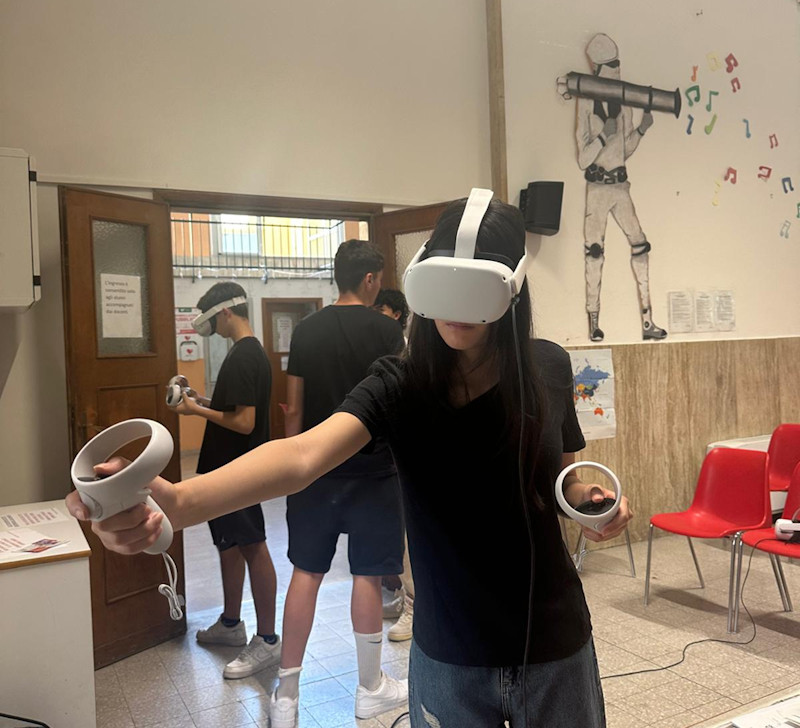
Virtual laboratory simulations operate through head-mounted displays that track users’ head and hand movements, translating these into interactions within a three-dimensional virtual environment. Students wear VR headsets and use handheld controllers to manipulate virtual equipment, pipettes, and reagents. The visual display creates a stereoscopic 3D effect, providing depth perception similar to that of real-world vision.
Current VR systems used in education range from standalone devices costing around €400-500 to more advanced setups requiring powerful computers. The choice of system affects visual quality and interaction complexity, though most modern platforms can run educational simulations adequately. Network requirements vary depending on whether simulations run locally or require cloud connectivity for multi-user sessions or progress tracking.
Case Study 1: Protein Extraction Simulation
ITSVita’s protein extraction module covers standard techniques including cell lysis, centrifugation, and chromatography separation. In the virtual environment, students work through the complete extraction process, from sample preparation to final protein isolation. The simulation includes multiple extraction methods, allowing students to practice different approaches based on protein type and source material.
The virtual laboratory contains replicas of standard equipment: centrifuges, homogenizers, and spectrophotometers. Students must follow proper procedures, including selecting appropriate buffers, setting correct centrifuge speeds, and monitoring temperature conditions. Mistakes in
The virtual environment results in visible consequences—incorrect pH levels cause protein precipitation, while wrong centrifuge settings lead to incomplete separation.
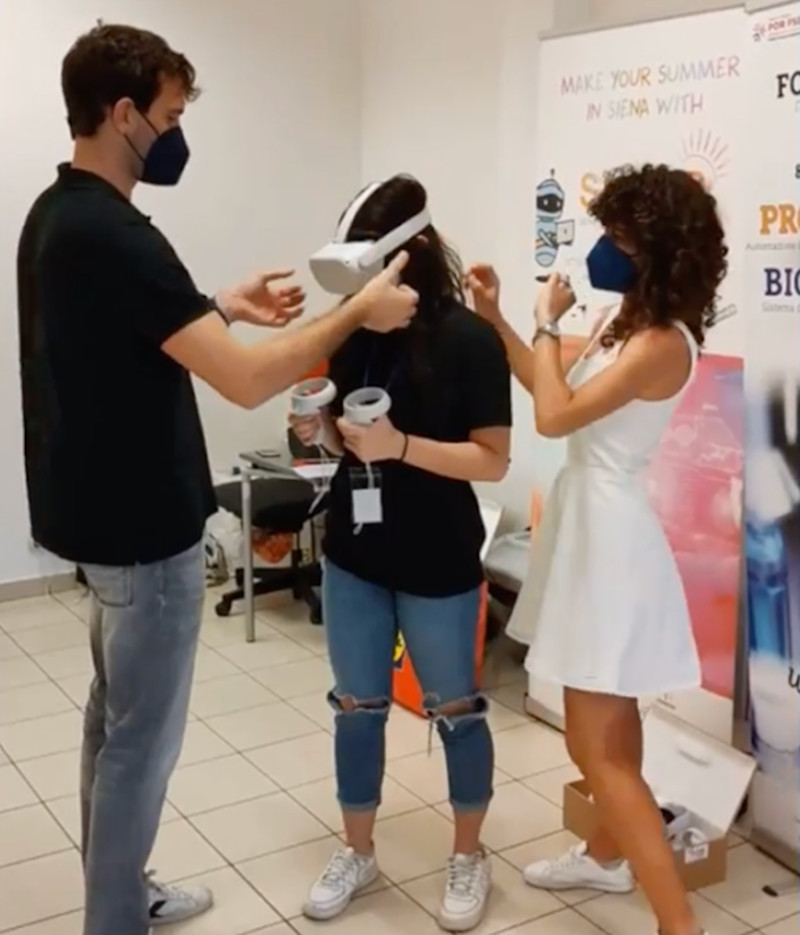
Initial testing with student groups showed mixed results. Students using the VR simulation demonstrated improved understanding of the overall extraction process and the relationship between different steps. In written assessments, VR-trained students scored on average 15-20% higher on questions related to procedure sequencing and troubleshooting. However, when performing actual laboratory work, these students initially struggled with physical equipment handling, particularly with tasks requiring fine motor skills such as pipetting small volumes or balancing centrifuge rotors.
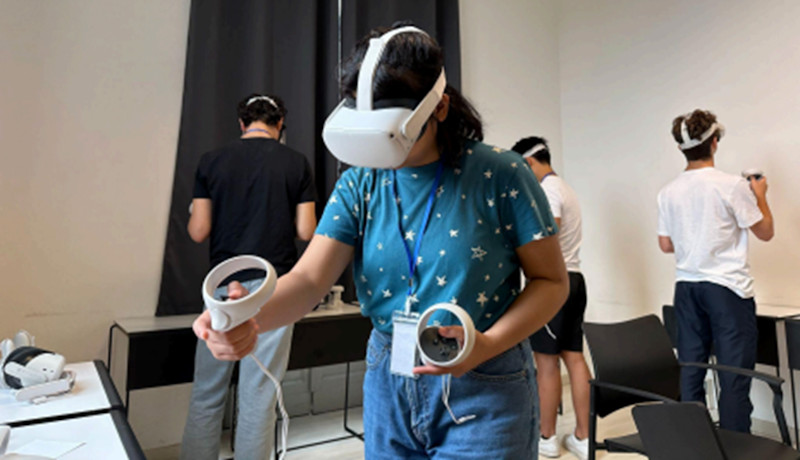
The most effective approach appeared to be using VR as a preparatory tool before physical laboratory sessions. Students who completed virtual training before their first laboratory session made fewer critical errors and completed procedures more efficiently than those who received only traditional pre-laboratory lectures. The ability to repeat procedures multiple times in VR helped students internalize the workflow, though it did not fully replace the need for hands-on practice.
Case Study 2: ELISA Test Simulation
The ELISA simulation represents one of ITSVita’s more complex implementations. The procedure involves multiple precise steps: coating microplate wells with capture antibodies, blocking non-specific binding sites, adding samples and detection antibodies, and measuring the resulting signal. Each step requires careful timing and accurate liquid handling.
In the virtual version, students practice pipetting techniques critical for ELISA success. The simulation responds to controller movement speed and angle, teaching proper pipetting form. Virtual microplates display realistic fluid behavior, including bubble formation when liquids are dispensed too quickly. The system tracks common errors such as cross-contamination between wells or inconsistent liquid volumes.
Performance data from ITSVita’s implementations indicate that VR training effectively teaches the conceptual understanding of ELISA procedures. Students trained in VR showed comparable theoretical knowledge to those receiving traditional instruction, with both groups scoring similarly on written examinations covering ELISA principles and applications. The virtual environment particularly helped students understand the relationship between antibody-antigen binding and signal generation, concepts that can be abstract when explained through diagrams alone.
Practical skill transfer showed more varied results. Students trained exclusively in VR required additional time to adapt to physical pipettes and actual microplates. The weight and resistance of real equipment differed from virtual representations, requiring a period of adjustment. However, students with VR training made fewer procedural errors, such as forgetting washing steps or adding reagents in incorrect sequences. They also demonstrated better understanding of why each step was necessary, rather than simply following protocols mechanically.
Integration with Traditional Teaching Methods
The most successful implementations at ITSVita combined virtual and traditional laboratory experiences rather than replacing one with the other. A typical training sequence begins with theoretical instruction, followed by VR simulation practice, and culminating in supervised physical laboratory work. This progression allows students to build confidence and understanding before handling expensive reagents and equipment.
VR simulations proved particularly valuable for preliminary training and concept reinforcement. Students could explore what happens when procedures are performed incorrectly without wasting materials or creating safety hazards. This exploratory learning was difficult to achieve in physical laboratories where mistakes have real consequences. One instructor noted that students who used VR simulations asked more sophisticated questions during physical laboratory sessions, suggesting deeper engagement with the material.
Assessment data should be interpreted cautiously. While VR-trained students often showed improved test scores, these improvements were modest—typically 10-15% above control groups. More significant benefits appeared in areas such as student confidence and willingness to attempt complex procedures. Surveys indicated that 72% of students felt more prepared for laboratory work after VR training, though this subjective measure does not necessarily correlate with actual performance improvements.
Practical Considerations and Limitations
Implementing VR training requires substantial initial investment. Beyond hardware costs, institutions must consider space requirements, technical support, and faculty training. ITSVita’s experience suggests that successful implementation requires at least one dedicated staff member familiar with VR technology and troubleshooting. Equipment maintenance and eventual replacement represent ongoing expenses that must be factored into budgets.
Technical limitations affect the training experience. Current VR headsets have limited resolution compared to natural vision, making it difficult to read small text on equipment displays or observe fine details. Some students experience motion sickness or eye strain during extended sessions, typically limiting effective training time to 30-45 minutes. These physical constraints mean VR cannot fully replace traditional laboratory hours, but rather supplements them.
The absence of tactile feedback remains a significant limitation. While visual and basic haptic feedback (vibrations) are present, students cannot feel texture, temperature, or resistance as they would with real materials. This particularly affects procedures requiring delicate manual skills. Several students reported that the transition from virtual to physical pipetting was more difficult than expected because they had not developed the muscle memory for holding and operating actual equipment.
Feedback from ITSVita’s implementations reveals diverse opinions about VR training effectiveness. Students generally appreciated the ability to practice procedures multiple times without pressure. Many found the visual nature of VR helpful for understanding spatial relationships and equipment operation. International students particularly valued being able to review procedures at their own pace, with some reporting that VR helped overcome language barriers in understanding complex protocols.
Instructors expressed mixed views. Those comfortable with technology integration found VR tools valuable for pre-laboratory preparation and concept illustration. However, some instructors worried that VR might give students false confidence in their practical abilities. Several noted that VR-trained students sometimes seemed surprised by the physical demands of actual laboratory work, such as standing for extended periods or managing multiple simultaneous tasks.
Conclusions
Virtual reality simulations offer useful tools for science education, particularly in providing safe, repeatable practice opportunities for complex procedures. ITSVita’s implementations of protein extraction and ELISA simulations demonstrate both the potential and limitations of current VR technology in educational settings.
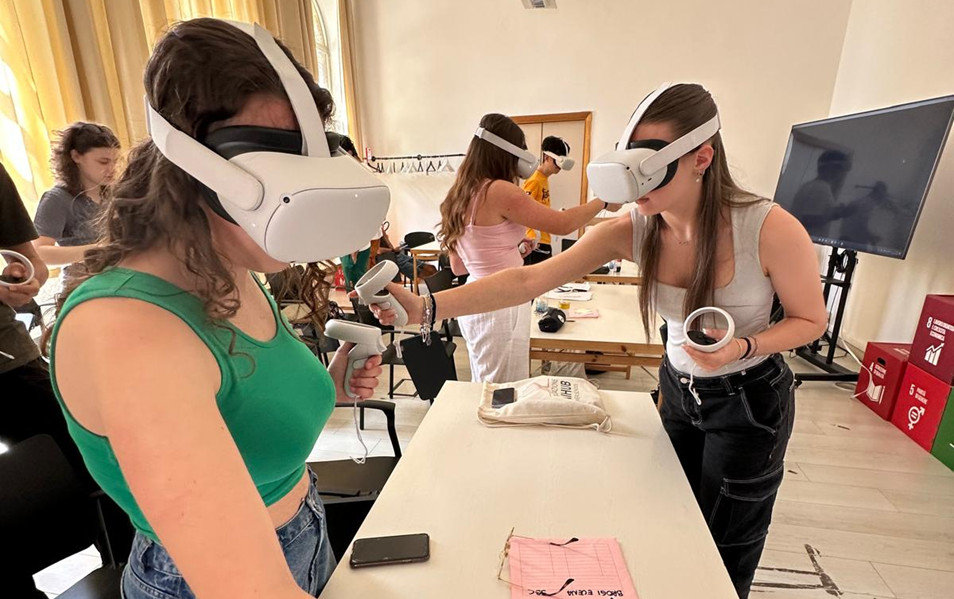
The evidence suggests that VR works best as a complementary tool rather than a replacement for traditional training (that can be in laboratory or not). What was also confirmed by the “Workshop on the use of VR tools in the training process – a case study of the implementation of soft skills training in a VR environment” conduced as part of the project “Training registry of the Modern Business Services sector” (https://mbssregister.eu/en/). The goal was to test the functionality of the developed solution (User Acceptance Testing, or UAT) with the participation of end users and gather feedback for optimization. An additional goal was to improve participants’ skills in using VR technology in training processes and develop communication and teamwork skills.During the workshops, participants worked with trainers on theoretical topics and then performed training scenarios in a shared VR environment, working in multiplayer mode and using assigned tasks, applying the theory they learned about effective communication and teamwork.
Students benefit from the conceptual understanding and procedural familiarity gained through VR practice, but still require physical laboratory experience to develop practical skills. Institutions considering VR adoption should plan for integrated training programs that leverage virtual simulations for preparation and reinforcement while maintaining hands-on laboratory components.
Cost-effectiveness depends heavily on program scale and implementation strategy. While VR can reduce consumable costs and increase training accessibility, the technology requires significant initial investment and ongoing support. Success depends not only on technical implementation but also on faculty buy-in and appropriate curriculum integration.
As VR technology continues evolving and costs decrease, its role in science education will likely expand. However, current evidence indicates that the most effective approach combines virtual and physical experiences, using each medium’s strengths to create comprehensive training programs. ITSVita’s experiences provide valuable insights for institutions navigating this evolving educational landscape, demonstrating that while VR offers promising opportunities, its implementation requires careful planning, realistic expectations, and sustained commitment to achieve meaningful educational outcomes.